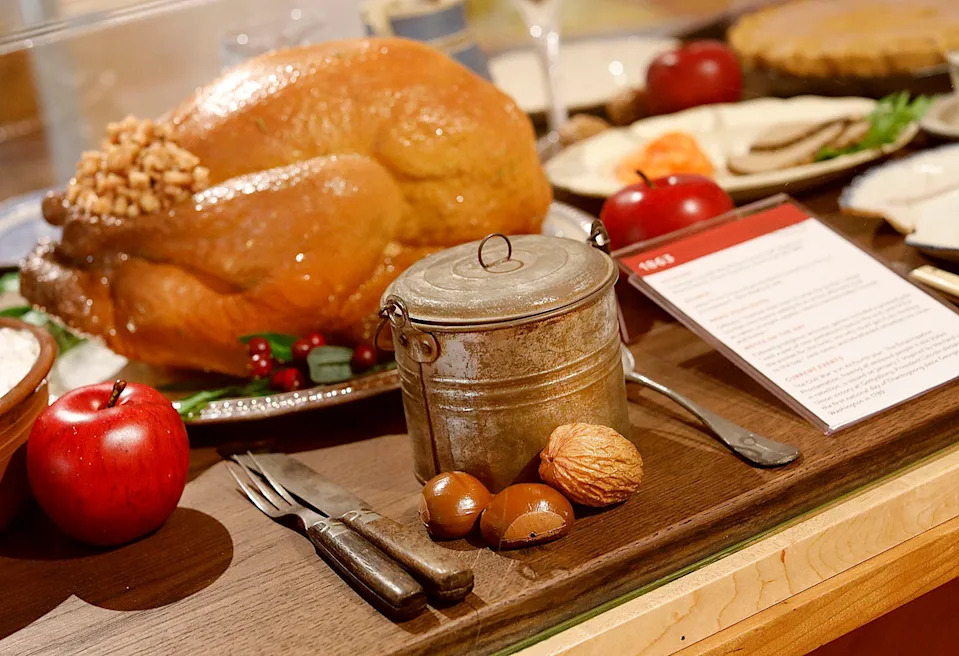
A celebration in the colonial contact zone, a step in nineteenth-century nation-building, an occasion for mass travel in the twenty-first century: Thanksgiving is many things to many people. And while its meaning has drastically shifted over the course of the last 400 years, it has remained significant in US cultural imaginary as both narrative and ritual. Thanksgiving, hence, offers a particularly rich object of study. Its long history allows us to trace key developments in US cultural history, while its composition of diverse facets – a historical event, a cultural myth, a national holiday, a family tradition, a media spectacle – requires us to contemplate the different approaches, contexts, and sources in our cultural-studies toolbox. Together, we will look at the development of Thanksgiving as a holiday and the way it has been celebrated, the various uses and retellings of the “First” Thanksgiving in politics and culture, and, finally, representations of Thanksgiving (celebrations) in recent media.
Participants in this seminar will thus engage with core American Studies scholarship on the relevance of rituals, myths, and symbols, train their ability to work with primary material, and hone their skills in cultural analysis.
This seminar will be of value in particular to future teachers who want to be prepared to guide their students in the critical reflection on “popular” versions of US history and the role and representation of traditions and rituals.
- Dozent/in: Katrin Horn